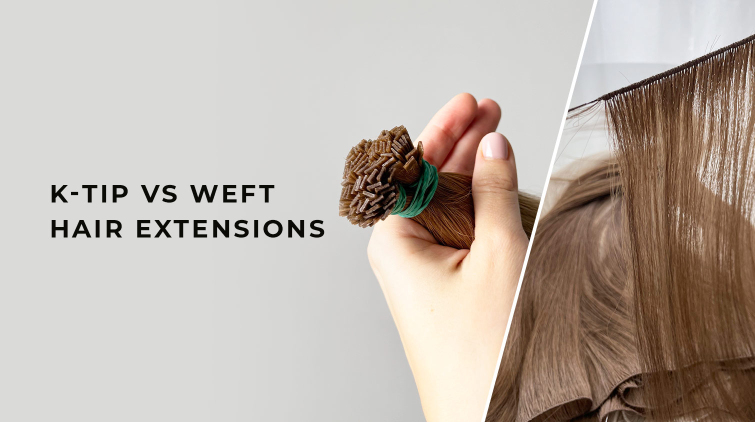
Choosing a hair extension technique is not just about adding length and volume, it is a decision that directly impacts your comfort, appearance, and hairstyle. That’s why many people face the dilemma: what would be better for me - keratin extensions or weft? The search k tip extensions vs weft is popular among those who want to understand the differences between these methods, and make an informed choice.
In this article we are going to compare both extension methods, explore their advantages, maintenance, and help you decide which one works better for your hair type, lifestyle, and desired look.
CONTENTS
- What Are Weft Hair Extensions?
- What Are K-Tip Hair Extensions?
- Weft vs K-Tip Extensions: Key Differences
- K-Tip vs Weft Hair Extensions: Pros and Cons
- K-Tip or Hand-Tied Weft Extensions: Which Are Best for You
- Keratin Bond Extensions vs Weft Price
- Hand Tied Extensions vs Keratin Bond Care and Maintenance
- Conclusion: Choosing Between K-Tip Extensions and Weft
What Are Weft Hair Extensions?
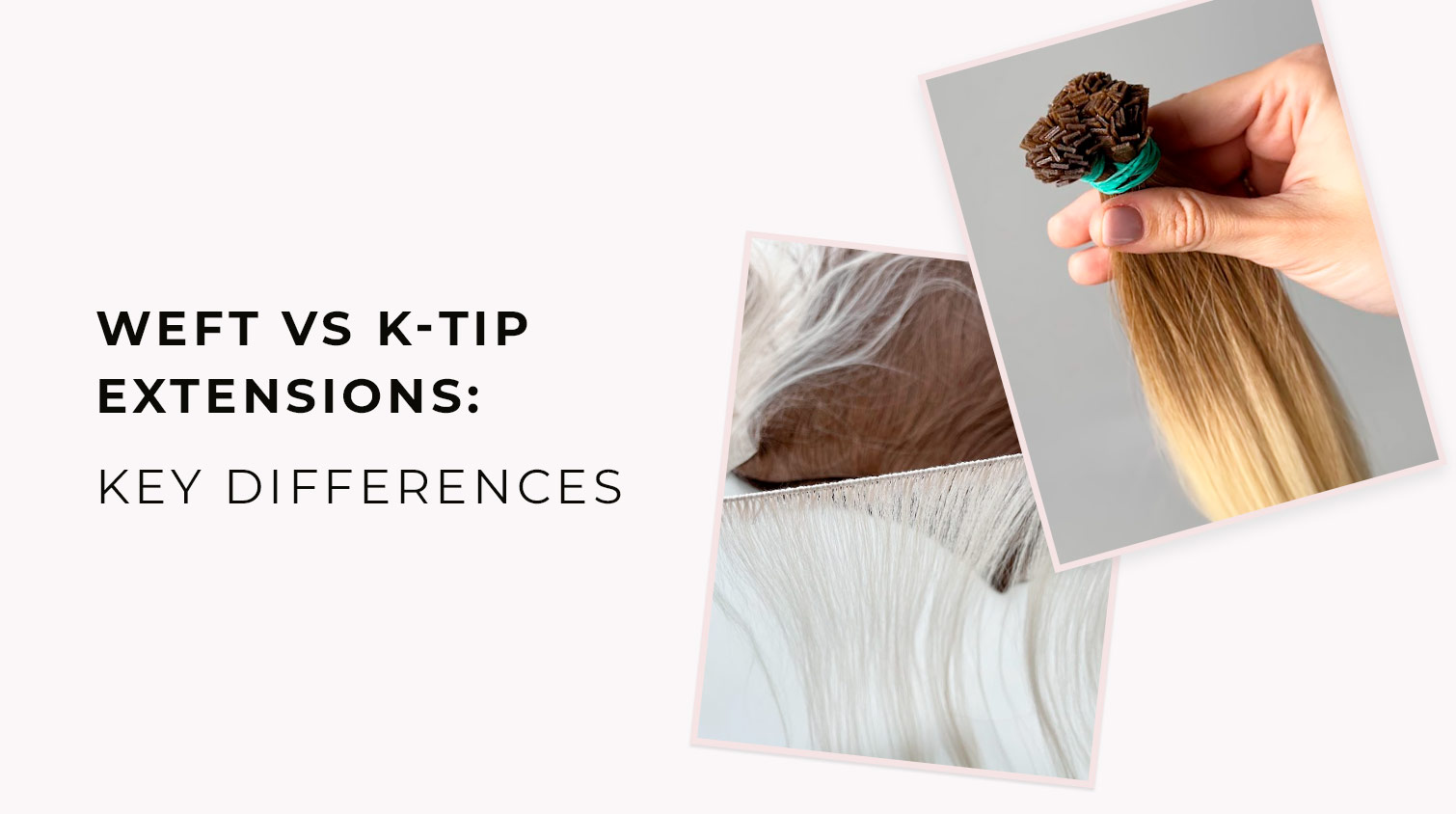
Weft hair extensions are one of the most popular ways to add noticeable volume and achieve a natural, full look. They consist of rows of real hair attached to a base that’s secured with a sew-in technique.
Sew-ins involve braiding your natural hair into thin tracks, then stitching the wefts onto these braids. This method distributes weight evenly without overloading your roots and doesn’t require glue or keratin for attachment, making it one of the safest options for your natural hair.
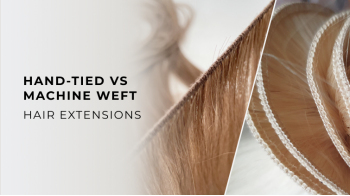
Wefts come in different types, but the most common are machine-tied and hand-tied wefts.
- Machine-tied wefts are made using special equipment. They are thicker, denser wefts (about 0.07 inches/ 2mm thick), too bulky and heavy for clients with fine and delicate hair. But they hold their shape well, and suit thick hair perfectly.
- Hand tied weft extensions are crafted manually, making them thin, flexible, and nearly invisible in your hair. They’re usually 0.02 inches (0.76 mm) thick and 0,04 inches (1.16mm) high, perfect for fine to medium hair, and can be customized for shape, density, length, and color, giving the most natural, seamless look.
What Are K-Tip Hair Extensions?
K-Tip hair extensions are one of the highly popular techniques, using heat to attach individual strands with keratin bonds.
The installation process is as follows:
- The hair pro marks where keratin bonds will be placed. The installation starts at the back of the head and gradually moves to the temple areas.
- The stylist attaches each strand using keratin bonds and special pliers. All the bonds are located close to the scalp and covered with your natural hair, so the final result looks absolutely natural.
- Melted keratin forms a strong bond, securing the strand in place.
This method works for almost all hair types - from fine and soft to thick and dense. It can be used for full-head extensions as well as targeted corrections in areas lacking volume or thickness. With this approach, a hair tech can control the placement of each strand and create multi-layered, natural hairstyles.
One of the main advantages of k tip hair extensions is their natural look. When using high-quality human hair, the bonds are almost invisible, and the strands blend seamlessly with your own hair.
Another pro is that they are easy to style. Keratin extensions can be straightened, curled, dyed, and styled as you used to do with your own hair. The only thing to avoid is overheating the bonds with styling tools.
When installed correctly and properly cared for, keratin tips offer a long service life and require minimal maintenance. Moreover, professionally installed extensions may partially protect natural hair from external damage and preserve hair quality.
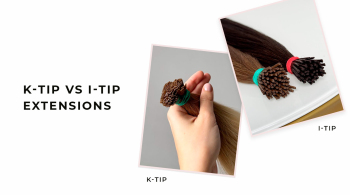
In addition to k tips, you can consider i tip extensions, which are attached with micro rings, avoiding the use of heat tools.
Weft vs K-Tip Extensions: Key Differences
When choosing between various hair extension techniques, it is important to consider not just the visual effect but also the specific aspects of installation, maintenance, and wearability. Let’s compare weft vs. k-tip extensions to find out which option better suits your lifestyle and hair type.
Installation process
- The main difference lies in the technique: wefts are attached using the sew-in method. First, the stylist makes thin braids, then sews a machine- or hand-tied weft onto them.
- K-tips: each strand is attached individually with keratin bonds made of melted keratin glue pellets.
Installation time and complexity
- Sew-ins are typically quicker to install. On average, the appointment lasts 2 to 3 hours, depending on the number of rows and hair density. When ordering hand-tied wefts, keep in mind that additional time may be required for your stylist to custom-make the weft according to your specific measurements and preferences.
- K-Tip extensions, on the other hand, are a time-consuming and meticulous process. Each individual strand is applied separately, requiring exceptional skill and attention to detail. The procedure usually takes 3 to 5 hours or even longer, depending on the number of bonds, their size (standard or micro bonds), your natural hair density, and the volume you want to achieve.
Longevity and Durability
- Weft extensions typically last 6 to 8 weeks before a move-up is needed. As your natural hair grows, the wefts shift downward and should be reapplied. With proper care, the hair itself can be reused multiple times.
- Keratin tip extensions offer a longer wear time. With proper installation and maintenance, they can last 2 to 3 months without reapplication needed. The strands are also suitable for reuse.
Compatibility with Different Hair Types
Sew ins suit perfectly different hair types. For example, machine wefts made from dense and thick European hair are an ideal solution for clients with naturally thick, coarse hair who want to add some length or volume.
Hand tied wefts, made from Russian hair fit for medium to thick hair types. And for fine hair we recommend choosing hand-tied wefts made from soft and thin Slavic hair.
Like wefts, keratin extensions are considered a versatile extension technique, you can choose from the three abovementioned hair types and enjoy a beautiful and comfortable hairstyle.
You can use standard size bonds (1 gram per strand), as well as micro bonds (0.5-0.7 grams per strand). Micro bonds are perfect for fine or weakened hair and for targeted extensions, for example, when you need to add density around the temples.
K-Tip vs Weft Hair Extensions: Pros and Cons
Understanding the real advantages and potential drawbacks of k tip vs weft extensions helps you choose the option that truly fits your lifestyle, hair type, and personal preferences.
Below is a table with clear comparison of keratin hair extensions and sew in extensions, to help you choose the option that suits you best.
| Extension type | Advantages | Drawbacks |
|---|---|---|
| K-tip hair extensions |
|
|
| Weft hair extensions |
|
|
It may seem that disadvantages outweigh the benefits, but that’s not the case.
If you choose a qualified, experienced stylist and carefully follow their aftercare recommendations, either of these techniques can be completely safe and trouble-free.
K-Tip or Hand-Tied Weft Extensions: Which Are Best for You
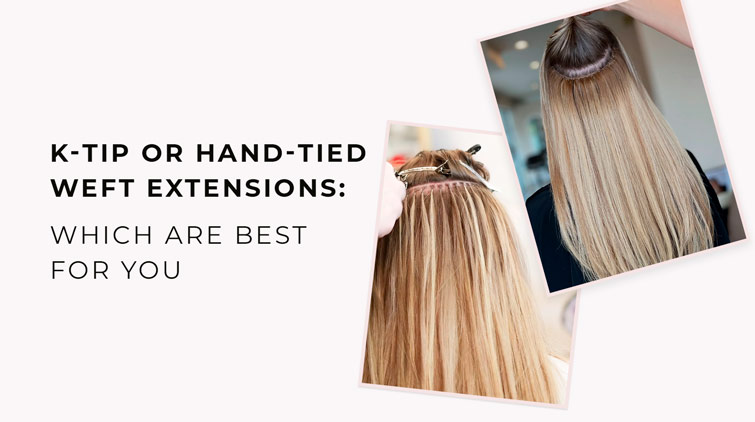
When comparing k tip vs hand tied extensions, it is important not to focus only on technical details, consider how the result fits your everyday style.
Main factors:
- Desired effect: light layers (k tip) or maximum volume (hand tied extensions);
- Hair density: if you have medium to thick hair, wefts are a great option; for very fine hair, bonds are usually the most optimal choice;
- Lifestyle: for very active lifestyle with frequent high updos, k tips may feel more convenient;
- Budget: weft extensions often cost less than keratin tip extensions.
Still in doubt what to choose?
- If you don’t have specific requests, consider which technique has more experienced stylists available in your area;
- If you are looking for best hair extensions for target application and natural look, if you prefer high ponytails, or if you have a short hairstyle, then it is better to choose k tips;
- If you want to maintain the same length and avoid using hot tools, then opt for wefts.
Whatever you choose, we at I Love Slavic Hair are confident you’ll fall in love with the result.
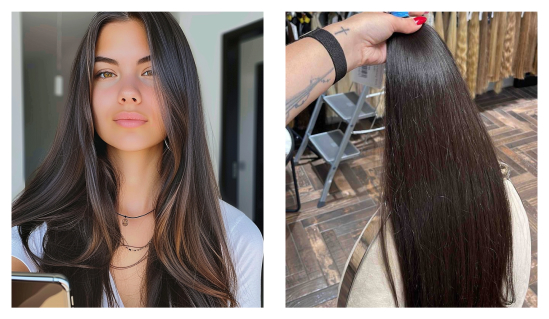
Let Us Help You Find A Perfect Match
Achieve your dream hairstyle with top-quality virgin Slavic, Russian, and European hair extensions that can be dyed, styled, and treated just like your own hair.
We can help you to find the perfect hair match in 3 easy steps:
Fill out our questionnaire
Attach photos of your hair
Receive pictures & videos of hair bundles

Get Your FREE Shade Match Today!
MATCH MEKeratin Bond Extensions vs Weft Price
When comparing prices for keratin bond extensions vs weft, be sure to consider not just the installation cost, but also the expenses for maintenance and how long they’ll last.
What Influences the Cost:
- Hair quality and type: the cheapest option is European hair, the most expensive is virgin Slavic hair. The choice should be based on your natural hair type;
- Length and density: the longer and heavier the hair, the higher the price;
- Stylist experience and location: the prices are higher in larger cities and at top-level stylists;
- Installation complexity: Micro bonds are considered difficult technique, so they are more expensive than standard bonds or wefts;
- Color: Cold blonde shades often cost more than other hair colors.
Approximate Price Range:
- Keratin Bonds: Typically cost more due to labor-intensive strand-by-strand installation. Besides, while reapplication procedure, the strands require re-tipping, which affects the maintenance price. The average price for a 100g bundle prepared for keratin tip installation at I Love Slavic Hair starts from XXX.
- Wefts: Usually more affordable than bonds. Maintenance is simpler and therefore less costly. The average price for 100g wefts at I Love Slavic Hair starts from XXX.
Hand Tied Extensions vs Keratin Bond Care and Maintenance
Proper aftercare directly impacts longevity, appearance, and the health of your natural hair. Let’s compare the aftercare requirements for hand tied extensions vs keratin bond:
For both methods it is important to use gentle, sulfate-free shampoos, wash hair upright, and avoid tangling at the roots. It is recommended to use a special brush, starting at the ends and gradually moving up. Blow-dry with warm air, paying close attention to the attachment area.
- Keratin bonds are sensitive to overheating and mechanical impact. It is better to avoid frequent use of flat irons and curling irons near the root area. And do not pull or tug while brushing.
- As for the wefts, the most important is to protect the wefts and the braids. Thoroughly dry the attachment area after washing. To minimize tangling, sleep with a loose braid of tail.
Regular maintenance, the use of professional care products, avoiding sleeping with wet hair, aggressive scalp peels, and frequent contact with salt water or chlorinated pools help significantly prolong the service life and durability of the extensions.
Conclusion: Choosing Between K-Tip Extensions and Weft
The right choice between keratin bonds and wefts depends on your priorities and hare care routine. Our brief comparison of k tip extensions vs weft will help you take an informed decision and determine which technique works best for you.
| Feature | Weft Extensions | K-Tip Extensions |
|---|---|---|
| Application | Sew-in / beaded | Hot fusion |
| Installation | Faster | Slower, precise |
| Best for | Medium to thick hair | Fine to medium hair |
| Maintenance | Frequent move-ups | Less frequent |
| Reusability | Reusable | Reusable |
| Longevity | Depends on care | Long-lasting with proper care |
By contacting I Love Slavic Hair, you can order high-quality hair and professionally prepared materials for both techniques, as well as receive detailed consultation on choosing the right option for you. Choose trusted solutions for K-Tip and Weft hair extensions with us and create the exact hairstyle you’ve always dreamed of.
Frequently Asked Questions